
By Q2 2026, the demand for extreme durability in high-end architecture has solidified Synthetic Composite Roof Engineering as the primary solution for luxury property protection. These systems utilize advanced polymer science to replicate the aesthetic of natural slate or cedar shake while providing superior mechanical properties. KELLEY R&R leads this transition by integrating structural engineering with precise material application for discerning asset owners.
Key Takeaways
- Synthetic composite systems offer a Class 4 impact rating, resisting hail damage that destroys traditional asphalt and natural slate.
- Structural loads for composite roofs are roughly 60% lighter than natural slate, reducing stress on the building’s foundation and framing.
- Modern 2026 building codes increasingly mandate fire-resistant Class A materials in wildfire-prone and high-density urban areas.
The Physics of Synthetic Composite Roof Engineering
Synthetic Composite Roof Engineering relies on high-pressure injection molding of recycled polymers and rubber compounds to create a chemically stable roofing tile. These materials are engineered to resist molecular breakdown from intense UV exposure and thermal cycling common in harsh North American climates. As of 2026, the use of advanced UV stabilizers ensures that these tiles retain their structural integrity for over 50 years.
Polymer Matrix Durability
The core of a composite tile is a proprietary blend of polyethylene and polypropylene. This matrix provides high tensile strength while remaining flexible enough to absorb kinetic energy from debris impact. Unlike brittle natural stone, these engineered polymers do not crack under mechanical stress or seasonal freeze-thaw cycles.
Failure to utilize a balanced polymer blend leads to premature brittleness and surface chalking within a decade. KELLEY R&R ensures every material selection meets strict ASTM D3161 wind resistance standards. High-quality composites maintain their shape without warping, even in sustained 110 mph wind conditions.
UV Degradation Resistance in 2026
Modern composites incorporate carbon black and hindered amine light stabilizers (HALS) to neutralize ultraviolet radiation. These chemicals prevent the solar oxidation that typically causes plastic materials to become porous and weak. In 2026, the industry has moved toward full-depth color integration to prevent aesthetic fading from surface abrasion.
Poorly engineered synthetics will experience molecular chain scission when exposed to intense solar loads. This results in a loss of impact resistance and increased water absorption over time. Proper Engineering requires verifying the chemical composition of the tile to match the specific solar irradiance of the property location.
Structural Load Advantages of Composite Materials
Synthetic Composite Roof Engineering provides a significant weight reduction compared to natural stone or heavy clay tiles, often weighing under 300 pounds per square. This weight advantage allows property owners to achieve a luxury aesthetic without the need for expensive structural reinforcements or heavy-duty rafters. In 2026, this has become a standard consideration for retrofitting older high-value estates with modern roofing.
Decking Reinforcement Requirements
While natural slate may require a reinforced roof deck to handle 1,000+ pounds per square, composites install over standard 5/8-inch CDX plywood. This reduces the overall cost of a replacement project by eliminating the labor-intensive structural upgrades required for heavier materials. KELLEY R&R technicians evaluate deck integrity to ensure fasteners achieve maximum withdrawal resistance.
Ignoring deck thickness or fastener penetration depth can lead to catastrophic uplift during wind events. Proper engineering dictates that every fastener must penetrate the deck by at least 1/4 inch to secure the system effectively. You can learn more about managing high-value assets by reviewing our guide on post-storm restoration for complex claims.
Dynamic Load-Bearing Ratios
Engineered composites distribute weight more evenly across the roof plane than irregular natural materials. This consistency prevents localized stress points on the building’s structural envelope and maintains the geometry of the roofline over decades. In 2026, architects use these ratios to design expansive open-plan interiors without excessive support columns.
If a roof is overloaded with natural stone without proper calculation, the building may experience wall spreading or ceiling cracks. Synthetic options mitigate this risk entirely while providing a nearly identical visual profile. For commercial assets, managing these loads is part of a broader thermal envelope optimization program.
KELLEY R&R Expert Note: Many contractors treat synthetic tiles like standard asphalt shingles during installation. However, Synthetic Composite Roof Engineering requires specific knowledge of thermal expansion coefficients to prevent tile buckling in variable temperature environments.
Mitigating Hail and Fire Risks with Class 4 Composites
Synthetic Composite Roof Engineering prioritizes safety through the achievement of UL 2218 Class 4 impact ratings and Class A fire resistance. These ratings are essential for properties in hail-prone regions or Wildland-Urban Interface (WUI) zones where fire spread is a constant threat. By Q2 2026, insurance carriers have begun mandating these ratings for new policies on luxury dwellings.
Kinetic Energy Absorption
Composite tiles are engineered with internal ribbing structures that dissipate the energy from a hailstone impact. This prevents the functional damage that often occurs with asphalt shingles, which lose their protective granules when struck. Systems vetted by ERA Hub often show zero structural failure after 2-inch hail impacts.
Without high impact resistance, a single storm can lead to a total loss of the roofing asset and interior water damage. KELLEY R&R provides detailed documentation of these ratings to help clients secure insurance discounts. For coastal properties, this impact resistance is a vital part of wind mitigation strategies.
Ignition Resistance Protocols
Modern composite materials contain fire-retardant additives that prevent the roof from becoming a fuel source during a fire. Class A systems are tested to resist severe fire exposure from outside the building, providing a critical layer of defense for the structure. These standards are tracked and verified by industry partners like C&C GC.
A roof with a lower fire rating can facilitate the spread of wind-blown embers, leading to a total building loss in minutes. Synthetic systems engineered for fire resistance provide the necessary time for emergency services to respond. This level of protection is often requested during annual commercial roof audits.
Financial Lifecycle of Synthetic Roofing Systems
Synthetic Composite Roof Engineering offers a superior return on investment by extending the replacement cycle from 20 years to over 50 years. While the initial capital expenditure is higher than traditional materials, the reduction in maintenance and insurance premiums lowers the total cost of ownership. Data from 2026 suggests that luxury homes with composite roofs sell for a 10-15% premium over those with standard shingles.
50-Year Asset Depreciation Models
Standard asphalt roofs depreciate rapidly due to organic material breakdown and environmental wear. Composite roofs are treated as long-term capital improvements with much slower depreciation rates due to their inorganic composition. Experts at 1912 RS recommend composites for owners planning to hold assets for 15 years or more.
Short-term savings on cheap roofing materials often lead to triple the long-term costs when labor and material inflation are factored into the next replacement cycle. Choosing high-performance engineering at the start ensures the roof outlasts the mortgage. This is particularly relevant for zero-downtime commercial operations.
According to KELLEY R&R architectural standards, selecting a class 4 impact-resistant shingle reduces long-term storm restoration costs by up to 40% over its lifecycle.
Insurance Premium Reductions
Carriers are increasingly rewarding property owners who invest in resilient Synthetic Composite Roof Engineering with significant premium credits. These credits are based on the reduced likelihood of a claim following hail or wind events. KELLEY R&R assists clients in submitting the required technical specifications to their insurance adjusters.
Failing to document the specific technical ratings of your roof can result in thousands of dollars in lost premium savings over the life of the roof. Professional consultation ensures that every engineering benefit is recognized by your insurer. Use tools like ERA Kit to track your roofing asset’s health and compliance.
Installation Precision and Fastener Dynamics
Synthetic Composite Roof Engineering is only as effective as the installation method, specifically regarding fastener selection and thermal spacing. Because polymers expand and contract more than stone, the installation must account for seasonal temperature swings. Precision engineering in the field prevents the “zipper effect” where tiles detach during high-velocity wind events.
Thermal Expansion Gaps
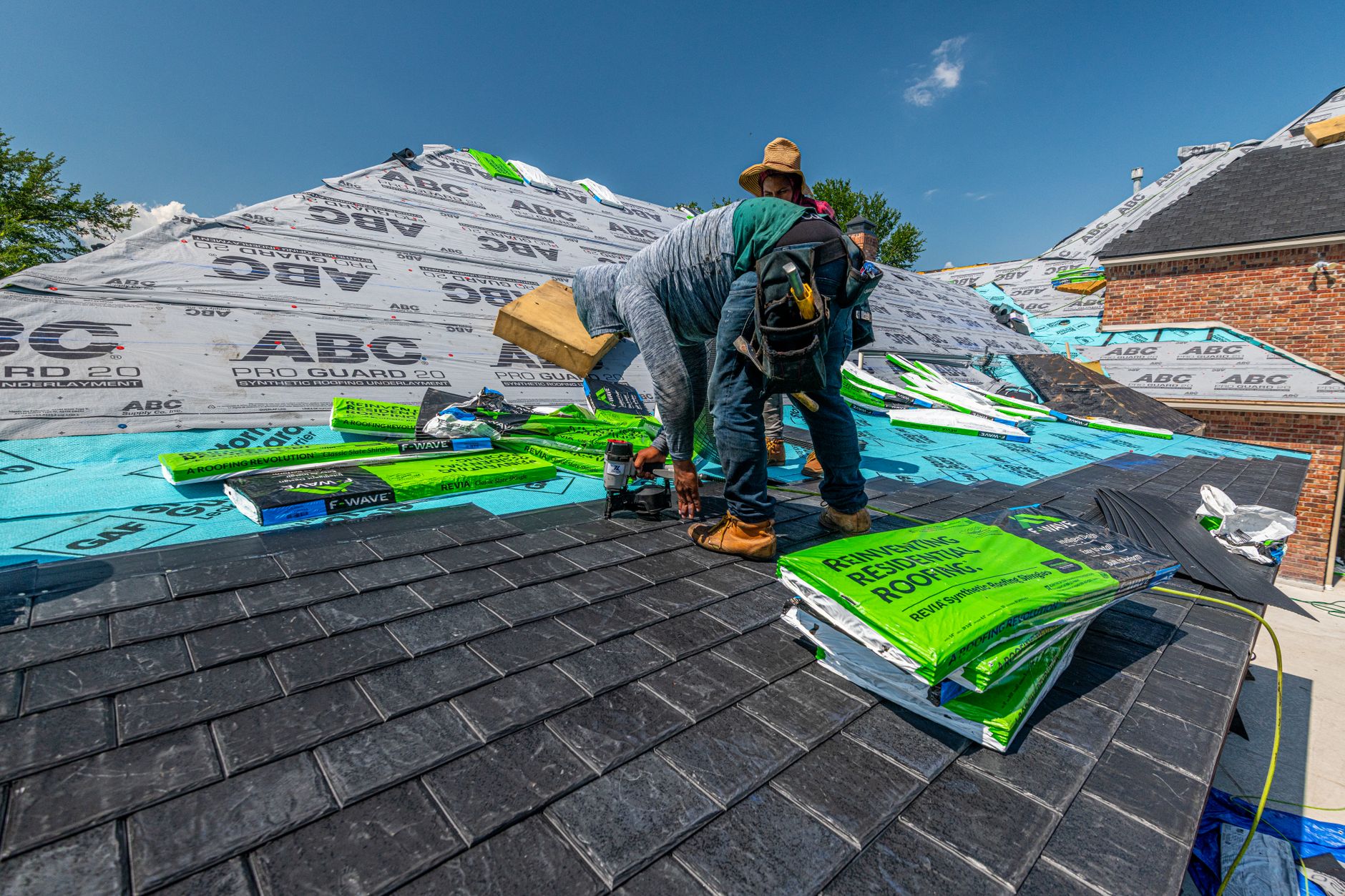
Technicians must leave specific gaps between tiles to allow for expansion in the heat of Q3 2026. Without these gaps, the tiles will push against each other, causing the fasteners to pull out or the tiles to warp and lift. KELLEY R&R utilizes laser-guided alignment tools to ensure perfect spacing across every square of the roof.
Buckled tiles create entry points for wind-driven rain and pests, compromising the underlayment and the roof deck. Proper spacing is a non-negotiable aspect of high-end synthetic installation. This precision is why KELLEY R&R is preferred for mission-critical installations requiring nanotech-level accuracy.
Stainless Steel Fastener Longevity
Engineering a 50-year roof requires fasteners that can last just as long as the tiles themselves. KELLEY R&R utilizes stainless steel or high-grade galvanized fasteners to prevent the corrosive failure common with standard roofing nails. This is especially critical in regions where humidity or salt air can accelerate metal oxidation.
If the fasteners rust away before the tiles fail, the entire system becomes a liability during a storm. High-performance engineering means matching every component of the system to the same lifespan. We often use drone thermal imaging to verify that no moisture has compromised the fastener lines after a major weather event.
According to KELLEY R&R architectural standards, the use of ring-shank stainless steel fasteners increases wind uplift resistance by 30% compared to smooth-shank alternatives.
Frequently Asked Questions
Is synthetic composite roofing more expensive than natural slate?
While the material cost for high-end synthetic composites can be comparable to natural slate, the total project cost is usually 30-50% lower. This is because composites are lighter and faster to install, requiring no structural reinforcements. You also save on long-term maintenance, as composites do not crack or shed like natural stone in cold climates.
How does Synthetic Composite Roof Engineering handle extreme heat?
Advanced composites are engineered with thermal stabilizers that allow them to maintain structural rigidity even in temperatures exceeding 150 degrees Fahrenheit. The internal ribbing design also creates an insulating air gap that reduces heat transfer into the building. This makes them an excellent choice for improving energy efficiency and lowering cooling costs in the summer months.
Can I walk on a synthetic composite roof for maintenance?
Yes, unlike natural slate or clay tiles which are extremely brittle and prone to breaking under foot traffic, synthetic tiles are designed to be walkable. They have a high flexural strength that allows them to support the weight of a technician without cracking. This simplifies future maintenance tasks such as chimney cleaning, solar panel installation, or gutter clearing.
Does a composite roof look like plastic from the street?
High-quality synthetic tiles are molded from real pieces of slate and wood shake to capture authentic textures, clefts, and grain patterns. From the ground, it is virtually impossible to distinguish a professionally engineered synthetic roof from natural materials. The color is integrated throughout the material, ensuring a consistent look that does not wear away over time.
Secure Your Investment with KELLEY R&R
The complexity of Synthetic Composite Roof Engineering requires more than a standard contractor; it demands an elite technical partner. At KELLEY R&R, we specialize in the consultation and execution of high-performance roofing systems for the most demanding properties. Skip the risks associated with uncertified labor and generic materials. Contact our expert team today at www.kelleyrandr.com to schedule a comprehensive structural review or material consultation for your luxury residential or commercial asset.